Edit Template
Edit Template

Who are we?

This travel blog is created by me, Lars Aldman, a Swedish journalist and traveller, always in the company of my wonderful wife V. who is also a journalist and a fantastic photographer.

I worked for many years for the Swedish National Radio and Television, as a reporter/producer/studio host and a bunch of other roles.but now I’m retired and do whatever I like.

We love to visit foreign countries and cultures and meet people all over the globe. So far we have been to Asia, Africa, South America and the Caribbean and of course Europe. And we’d like to share with You, dear reader, what we have experienced and seen. We hope You want to join us and possibly find ideas for Your own adventures.

PS. To see more of my photos from journeys far and near, head over to aldmangallery.com

To contact us via mail: info@resormedv.se

Edit Template

More results…

Generic selectors
Exact matches only
Search in title
Search in content
Post Type Selectors
Search in pages

Travels with V

Israel & Jordan

Travels with V

Israel & Jordan

Edit Template
Edit Template

In the city that was lost

Petra, Jordan

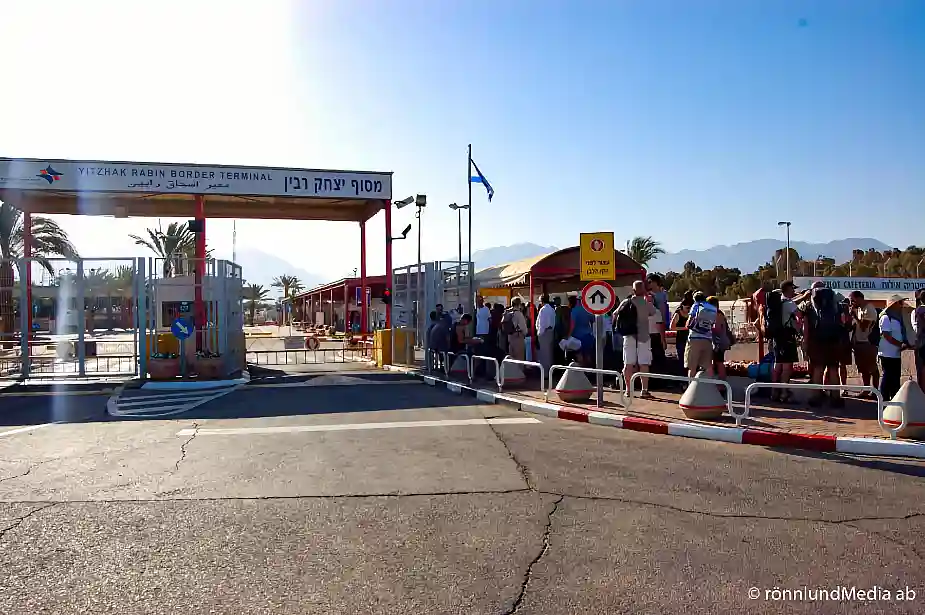
After a couple of days in the sun and sand in Eilat we start to feel restless and we set out to find a travel agency that organizes day trips to Petra in Jordan. We manage to get tickets for a tour the following day, and early next morning we find ourselves by the border control just outside Eilat city. It’s a relatively easy procedure to pass through first the Israeli and then the Jordan border. And then we jump on another bus that takes us north, passing the Wadi Rum desert with its strangely sculptured landscape and all the way to the entrance of Petra, the city that was lost.

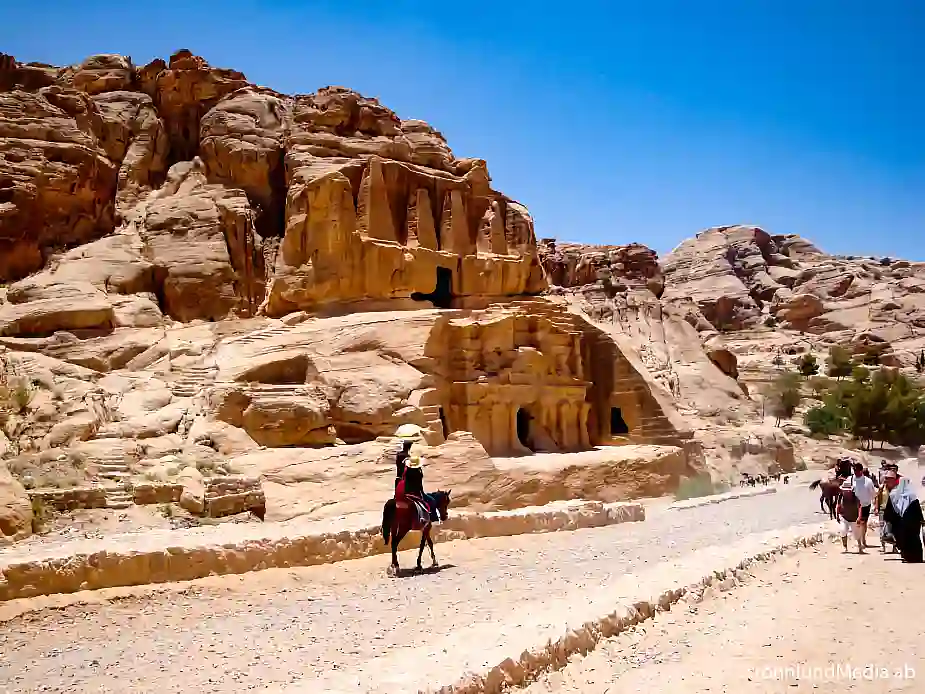
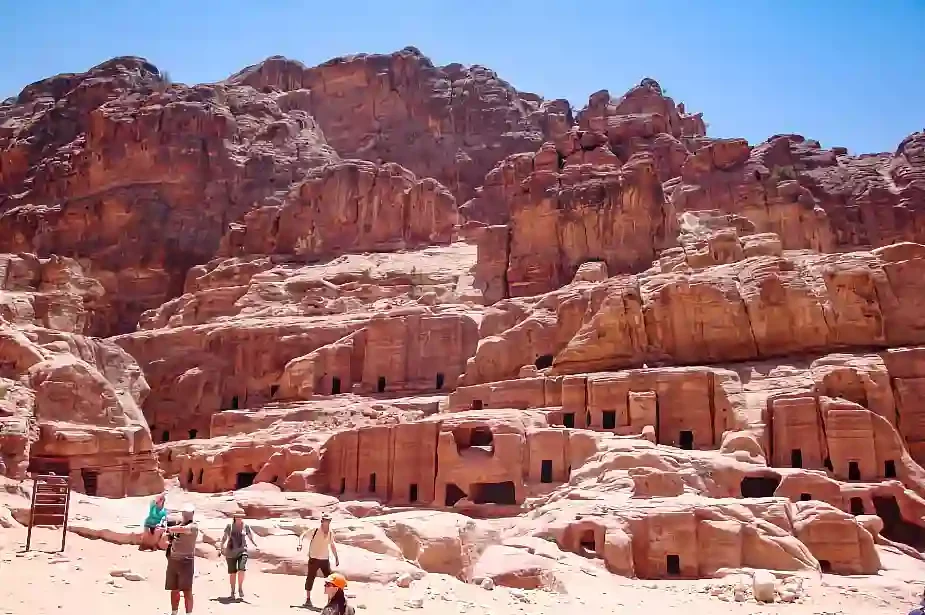
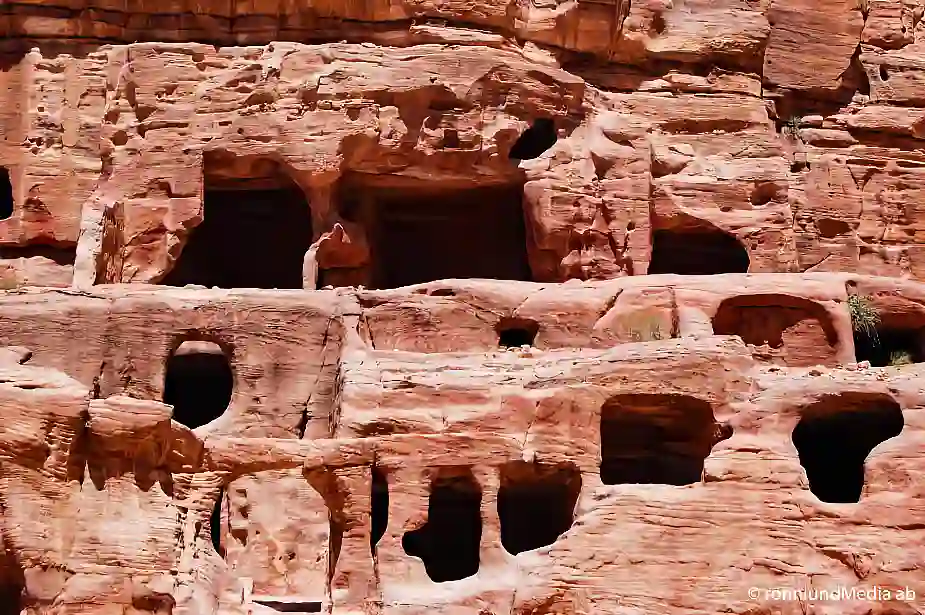
CAVES, OR RATHER TOMBS CLOSE TO THE ENTRANCE. PETRA IS FURTHER ON.

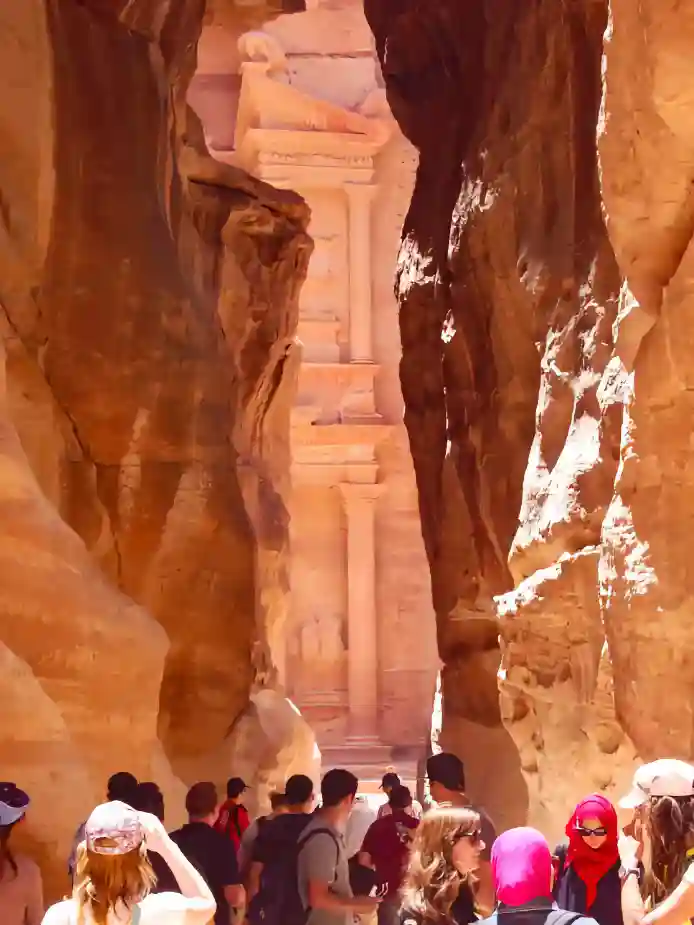
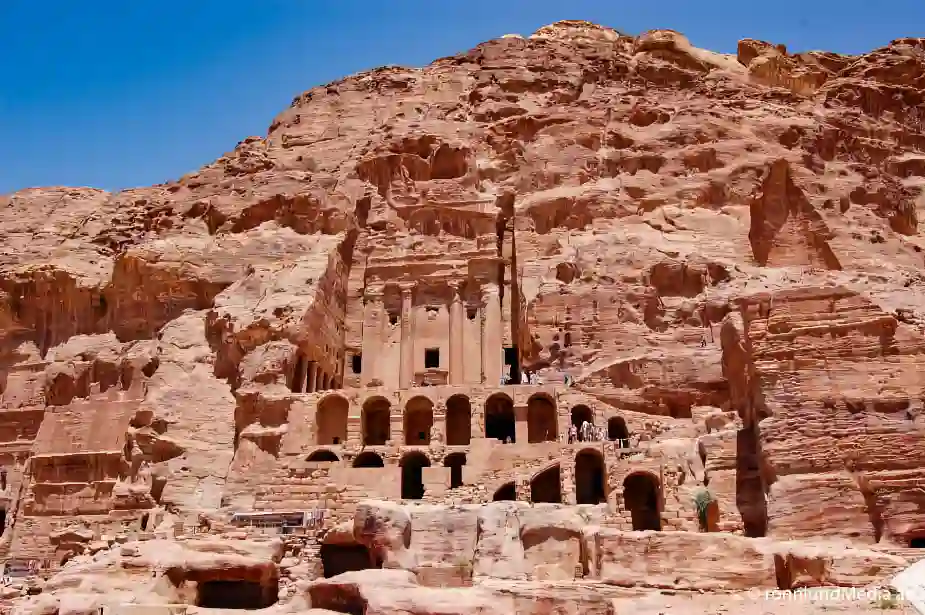
Most people when they hear of Petra will probably think of the Indiana Jones movie where the final scenes take place inside a large building cut into the rock. And the building in question is actually the first one that you encounter entering Petra. It’s called the Treasure Chamber, a misleading name since it’s actually a tomb. As most of the magnificent structures are.

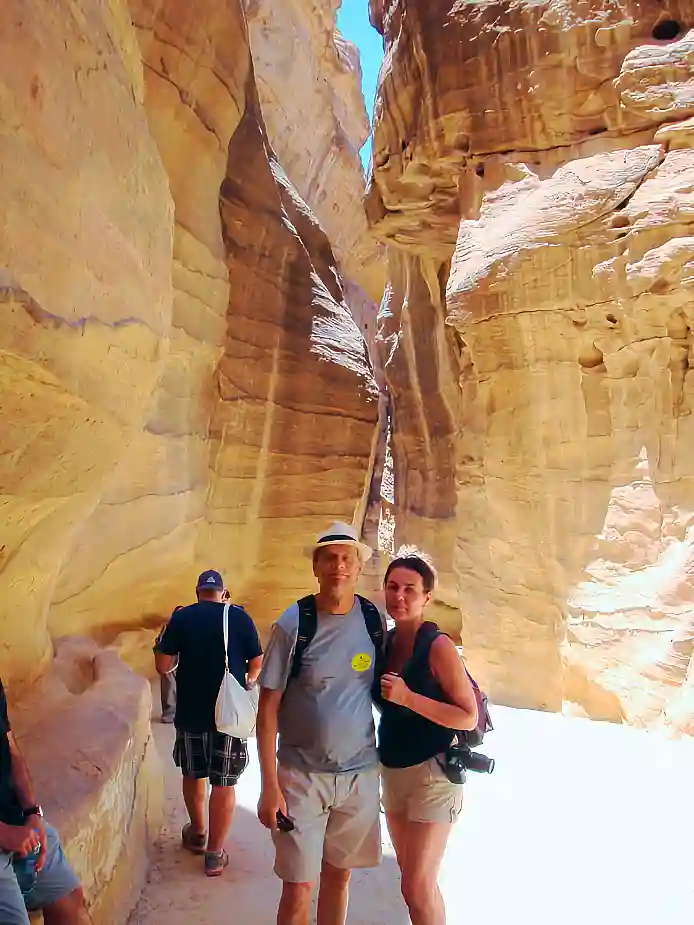
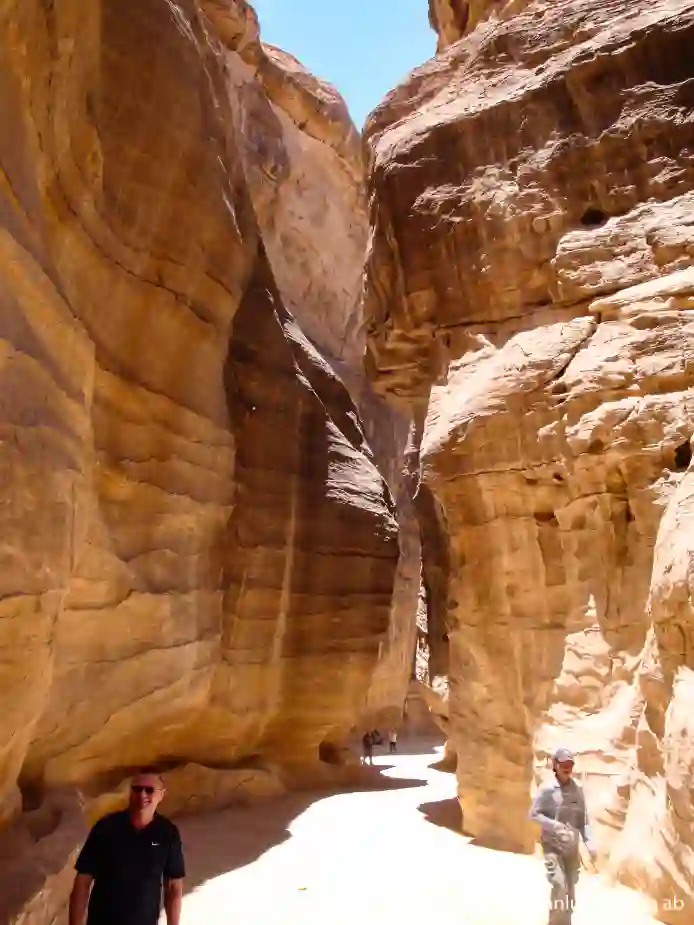
But before you get that far there is quite some way to walk. The road winds down through a narrow and steadily deepening ravine called “Siq”. It’s easy to understand how secret and difficult to invade the city must have been.

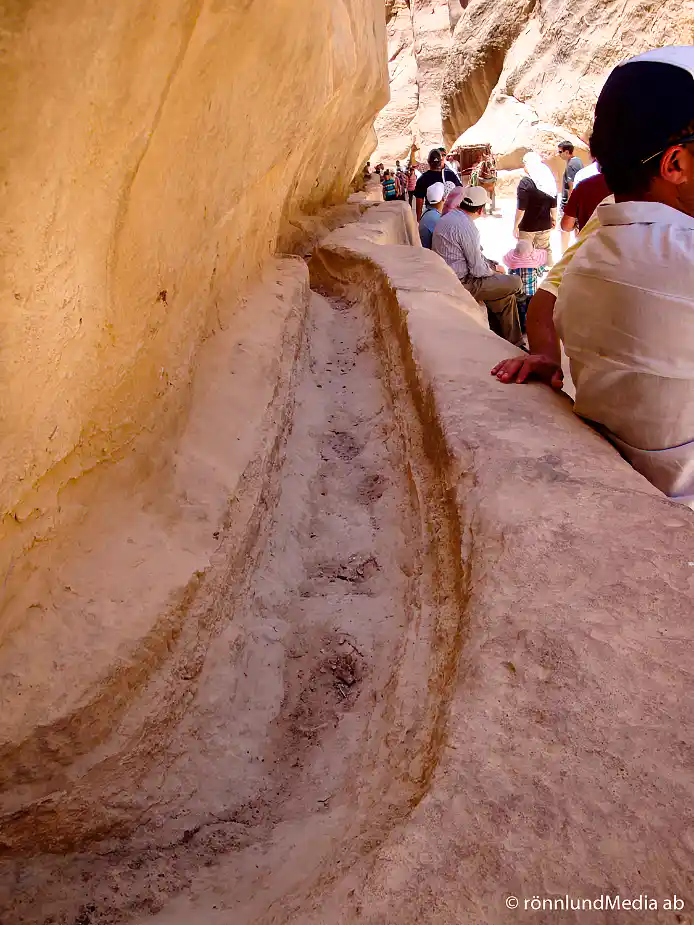
Petra was built, or rather excavated by a people called the Nabateans that by hacking out craftily constructed water canals on both sides of the Siq could offer housing, food, water and market for camel caravans transporting goods on routes between Persia, the Mediterranean and the Red Sea. The city prospered and according to estimates it had ca 30 000 inhabitants at its peak.

In the year 106 AD a Roman army conquered Petra. The Romans added buildings to the city, but soon things were changing. The caravans began to take other routes and the city went into decline.

About a thousand years ago Petra “was lost” and forgotten. When a German explorer managed to find it in 1812 bedouins were living in Petra’s caves, and they preferred that the city kept on being forgotten.

But of course that didn’t happen. The rediscovery of Petra was a sensation and it became a UNESCO world heritage site in 1985. The Bedouins hade to be evacuated and tourists poured in. Unfortunately our day trip didn’t give us time to see all of it, you should have at least 4-5 hours to spend there.

Next we return to Eilat to see the cools sea animals that help traumatized people to find their balance in life again.